

Radio Frequency – Level 2
- Start Date : 9 February, 2027
- Start Time : 1:30pm
- End Date : 9 February, 2027
- End Time : 5:00pm
- Address : Harbor Rm, N Tower
No Schedule

Anna Escarcega
With more than 32 years of experience working in Aerospace related work to include calibration of equipment in support of ICBM’s (Titan, Peackeeper, Minuteman), Air Launched Cruise Missiles (ALCM, ACM) and F-16 Fighter Jets. I served in the US Air Force where I was initially introduced to calibration while supporting F-16 aircraft.
I have experience in the calibration of various disciplines to include Radio Frequency, DC Low Frequency, Radio Microwave, Temperature, etc. .
I have served as Laboratory and Quality Manager for small to large companies to include L3 Communications in Torrance, CA, forming the infrastructure of a strong understanding of metrology. I have been involved in training personnel in various aspects of calibration that also include methods and techniques of trade. .
I currently serve as a contracted assessor Lead and Technical Assessor for ANSI National Accreditation Board (ANAB), conducting assessments across various calibration disciplines. I am proud to contribute to maintaining the highest standards of quality and technical competence and accreditation excellence through my work with ANAB.
Throughout my career, I have remained committed to promoting precision, technical excellence, and continual improvement within the fields of metrology, laboratory accreditation, and conformity assessment.
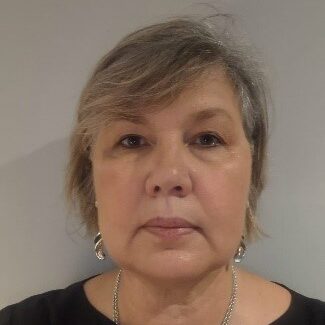
Yvette Volschenk
With more than 34 years of experience in calibration laboratories, I have developed extensive expertise across a wide range of calibration disciplines. My specialist field is temperature metrology, where I have calibrated a broad spectrum of equipment, including noble and base metal thermocouples, platinum resistance thermometers (PRTs), digital thermometers, liquid-in-glass thermometers, ovens, furnaces, incubators, autoclaves, dry-block (dry-well) calibrators, and other temperature measurement systems.
As a consultant, I provide expert guidance on the implementation and maintenance of internationally recognized quality standards. I have successfully assisted organizations in achieving accreditation to ISO/IEC 17025:2017 for calibration laboratories across various technical disciplines, testing laboratories, and stack emission sampling laboratories. In addition, I have assisted inspection bodies in obtaining accreditation to ISO/IEC 17020:2012 in the fields of occupational hygiene, textiles, clothing, leather and footwear, and electrical inspections. I am currently assisting these inspection bodies to update their quality management systems to ISO/IEC 17020:2026.
I present professional training courses covering the requirements of ISO/IEC 17025:2017, ISO/IEC 17020:2012, Measurement Uncertainty, Internal Auditing, and a variety of technical metrology disciplines. My training is designed to provide practical knowledge that enables organizations to achieve and maintain technical competence and compliance with international accreditation requirements.
From 2005 to 2015, I served as a contracted technical assessor for the South African National Accreditation System (SANAS) in the fields of temperature, force, torque, and hardness metrology. During this period, I was a member of the Temperature Special Technical Committee and served as Chairperson of the Force, Torque, and Hardness Special Technical Committee. I also participated in specialist working groups responsible for developing additional SANAS technical requirement documents and guidance for accredited laboratories.
I currently serve as a contracted assessor Lead and Technical Assessor for ANSI National Accreditation Board (ANAB), conducting assessments across various calibration disciplines. I am proud to contribute to maintaining the highest standards of quality and technical competence and accreditation excellence through my work with ANAB.
Throughout my career, I have remained committed to promoting precision, technical excellence, and continual improvement within the fields of metrology, laboratory accreditation, and conformity assessment.