

Tutorial Workshops
- Start Date : 7 April, 2026
- Start Time :
- End Date : 7 April, 2026
- End Time :
- Address :
No Schedule

T01: "The Book" on Resistance, from 0.1 micro Ohm through 100 TeraOhm Measurements – Full Day
- Tim Stark
- Harbor Rm, N Tower
Abstract 8 Hour hands-on course covering resistance measurements from 1 µΩ to 100 TΩ. Session A focuses on low to mid-range values based on current and high range values based on voltage, while session B will cover very low resistance and high currents. Session A will provide deep analysis into the characteristics and variables that affect test setups, measurement results and uncertainties. Special attention is covered for variables including resistance design, impact of wiring, proper guarding and grounding as well as well material contributions to uncertainty such as environmental, power and temperature coefficients, voltage coefficients, and individual drift of standards (with linear regression). Addressing these contributions in an uncertainty analysis will be provided. Session B (4 hours) overviews Precision DC high current measurements and high current sourcing using a 300A current source, several different types of current shunts and associated types of high current cabling. Participants will be able to use different setups and have hands-on practice and to see how different setups affect measurements. Involvement in this workshop will provide the participants with tangible demonstration of the considerations to making best and consistent measurements with high current. The participant will receive not only the best practices for these measurements, but the understanding why the techniques demonstrated are the best practices. Design considerations of high current standards will also be discussed. The measurements with high current will be explored from the perspective of measurement uncertainty such that the effect of the consideration outlined can be quantified in a real-world, practical uncertainty budget. Measurement parasites that affect high current measurements will also be covered as well as Safety considerations in high current measurements.

T02: Level 1 Temperature – Full Day
- Josh Mitchell
- Pacific Rm, N Tower
The Level 1 Temperature Calibration program delivers an in-depth introduction to temperature measurement and calibration techniques for laboratory and field environments. Key topics include principles of temperature, ITS-90, thermometer types (liquid-in-glass, PRTs, thermocouples), use of dry wells and liquid baths, uncertainty analysis, and documentation. Students engage in guided exercises to calibrate thermometers and interpret calibration data, reinforcing theoretical knowledge with practical skill-building. The program is aligned with industry standards and prepares technicians for advanced training in temperature metrology.
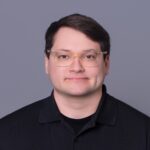
T03: General Metrology Fundamentals – Full Day
- Zachary Saleet
- Salon I, N Tower
The General Metrology Fundamentals course offers a practical, one-day introduction to the essential concepts of measurement science and its role in quality, manufacturing, and laboratory environments. Participants explore how metrology functions as a system—connecting measurement units, standards, traceability, and calibration processes across industries. The class features hands-on dimensional measurement exercises using calipers, micrometers, and gauge blocks, helping students connect theory to real-world practice. Key topics include an overview of the International System of Units (SI), the purpose and structure of calibration systems, basic uncertainty concepts, and the importance of documentation and traceability. Designed for both newcomers and experienced professionals seeking a refresher, this course provides a clear foundation for understanding how accurate measurements underpin reliability and compliance in any technical field.

T04: Level 1 Pressure – Full Day
- Jared Ford
- Garden 3, N Tower
The Level 1 Pressure Calibration course provides foundational knowledge and skills for calibrating pressure instruments, including analog and digital gauges, transducers, and manometers. The curriculum covers pressure fundamentals, units of measurement, standards (deadweight testers, pressure controllers), calibration procedures, and uncertainty evaluation. Practical lab exercises emphasize safe handling, traceability, and best documentation practices. Upon completion, participants are equipped to perform accurate and reliable pressure calibrations in compliance with relevant industry and laboratory standards.

T05: Test Uncertainty – The Revolution in Evaluating Measurement Uncertainty – 1/2 Day
- James Salsbury
- Salon VII, N Tower
Borne out of international standards in dimensional metrology, a revolution in measurement uncertainty is here. When it comes to conformity assessment of measuring instruments, most calibration laboratories continue to evaluate measurement uncertainty incorrectly. The result is overinflated uncertainties and questionable decision rule practices. In this lively and experiential learning experience, we will shatter some of the uncertainty myths that are holding back the metrology field. We will openly debate the concept of test value uncertainty – the term introduced in international standards for the evaluation of measurement uncertainty in the conformity assessment of measuring instruments. Test uncertainty is sweeping across dimensional metrology practice, and you should be embracing these powerful concepts too. And we will face the hard facts about words tossed around a little too lightly – resolution, repeatability, and reproducibility – three concepts that infiltrate measurement uncertainty with all too often devastating, yet avoidable, consequences. This learning experience will focus on concepts in measurement uncertainty available in recent ISO and ANSI/ASME standards and does not involve any complicated math. To get the most out of the class, attendees should have at least a basic understanding of measurement uncertainty. Bring your tough questions, be ready to debate, and don’t be surprised if you leave this session with some incredibly powerful tools that will change your measurement uncertainty and decision rule future.


T07: Level 1 RF & Microwave Level 1 – Full Day
- Marc Albert
- Garden 4, N Tower
The RF & Microwave Calibration Fundamentals course provides technicians with a comprehensive introduction to the principles and practices of calibrating radio frequency (RF) and microwave measurement systems. This hands-on program emphasizes the critical aspects of connector care—including pin depth inspection and cleaning techniques—to ensure measurement integrity at high frequencies. Key topics include the basics of VSWR (Voltage Standing Wave Ratio) using handheld vector network analyzers (VNAs), measurement of insertion loss, fundamentals of spectrum analysis, reactance, decibels, and power (watts) in RF applications. Students will engage in practical exercises to reinforce concepts, gain confidence with industry-standard equipment, and develop the troubleshooting skills necessary for high-reliability RF and microwave calibrations. The course is ideal for calibration technicians, engineers, and quality professionals entering or working in RF and microwave environments.
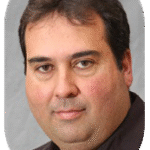
T08: GXP Metrology: A Strategic Approach to Biopharma Calibration Process Management – 1/2 Day
- Miguel Cerezo, Board Member, Treasurer
- Salon I, N Tower
This tutorial provides an overview of industry best practice calibration process management solutions that are tailored towards optimizing compliance while reducing costs and providing significant competitive advantage. Several examples of innovative calibration process improvements will be described. The course will provide a thorough review of fundamental calibration concepts and regulatory requirements. Consideration for optimizing cGMP calibration service provider qualification and approval will be provided as well.


T09: Mass and Mass Related Metrology: Fundamentals and Uncertainty Contributor Calculations – 1/2 Day
- Yvette Volschenk Anna Escarcega
- Salon VII, N Tower
Mass and Mass Related Mass The fundamental concept of mass, its units, and its distinction from weight, is suitable for a “Level 1” introduction to physics. It defines mass as the quantity of matter in an object, measured in kilograms, and contrasts it with weight, which is a measure of gravitational force. The abstract would likely also mention the formula m=ρ×Vm=𝜌×V (mass = density x volume) and highlight that mass is an intrinsic property of an object, whereas weight can change depending on location. Force The fundamentals of force include the concept of force as a push or pull that changes an object’s motion, defined by the equation F=maF=ma 𝐹=𝑚𝑎 (Force = mass × acceleration). Additionally, the concept is broken down into four fundamental forces: gravity, electromagnetism, the strong nuclear force, and the weak nuclear force. Furthermore, how are the uncertainty contributors identified, measured and how is the uncertainty budget calculated.
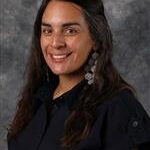
T11: Standards Driven Training Systems in Calibration Laboratories – 1/2 Day
- Dr. Helena Stevens
- Salon VI, N Tower
This comprehensive 4-hour course is designed for individuals seeking to enhance their ability to design and deliver effective training programs. Tailored for trainers, managers, and professionals in technical and non-technical fields, this session will provide participants with the tools to analyze training needs, understand adult learning principles, and create impactful training plans. Course Objectives Conduct Effective Training Needs Analysis (TNA): Participants will learn ways of identifying skill gaps and training requirements. Design and Develop Tailored Training Programs: Participants will learn an evidence based model for using standards to drive designing training programs that cater to the needs of the workers at any level. Understand Key Principles of Adult Learning: Building on established methodologies, participants will explore how adult learners acquire knowledge and how to adapt their training strategies to accommodate different learning styles and preferences. Define the Role and Responsibilities of a Trainer: Participants will gain clarity on the multifaceted role of a trainer, including how to inspire learning, facilitate knowledge transfer, and foster skill development in diverse audiences.

T14: Metrology 101: Back to Basics - Full Day
- Tim Mason, Board Member
- Harbor Rm, N Tower
This tutorial will present and examine a number of basic elements relating to the functions, features and concerns of a working calibration/testing lab & its personnel. This selection of topics is not traditionally covered in a Metrology training seminar. Design of this presentation covers items more of interest to individuals who are working in new disciplines, their Managers, Leads, Trainers or those whose formal calibration/testing experience has been limited to “On the Job Training” (OJT). Emphasis has been made to combine a series of short overviews that will provide a broad spectrum of information to lead the student to further pursue those topics of priority or interest. This real world approach builds upon elements of specific skill sets, both technical and standard compliance, measurement quality programs and its impact on performance. Topics to be presented Fun Facts of Metrology- Tim Mason Resistance is Futile – Tim Stark Calibrators and DMM’s- Jack Somppi Dimensional Basics- Dr. Jim Salsbury Artificial Intelligence and Metrology – Michael Schwartz The Making of a Good Metrologist; Why do we need a certification – Michael Schwartz Under Pressure – James Wagner Humidity Basics- James Wagner Big String Bang Theory- How to calibrate a length of String- Jesse Morse Open topics -question and answers Who Should Attend? All Metrology personnel, Calibration Managers & related staff, Instrument, Test & Quality engineers, wanting to augment or reinforce current skills, Companies & Programs looking into creating or extending their calibration/testing functions. Current “Program” representatives interested in enhancing their understanding of the measurement field and Metrology/Calibration/ Test technicians who are looking to expand their skill set with a broader knowledge of the application of measurement science
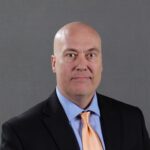
T16: Hands-on Dimensional Calibration, focused on small tools like calipers and micrometers – 1/2 Day
- James Salsbury Jeff Meyerholz
- Salon I, N Tower
Mitutoyo America’s Gage Calibration courses are unique, active, educational experiences designed specifically for those who plan and perform calibrations of dimensional measuring tools, gages, and instruments. This course is a condensed half-day version of the most popular course and will cover the calibration of outside micrometers and calipers. In addition, the course will build a base understanding of the principles in dimensional calibration so the student can extend the concepts to other measuring equipment. Learning objectives: 1) Participants will learn key calibration strategies, do’s/don’ts, and best practices through hands-on experiential learning. 2) Participants will identify appropriate standards, gages, environmental controls, and resources necessary to successfully complete micrometer and caliper calibration. 3) Participants will recognize additional learning resources, professional development opportunities, and credentials available in the field of dimensional metrology.
T17: RF Metrology: Fundamentals and Uncertainty Contributor Calculations – 1/2 Day
- Yvette Volschenk Anna Escarcega
- Salon VII, N Tower
This abstract covers the following: Radio Frequency Radio frequency (RF) fundamentals describe how electromagnetic waves in the 3 kilohertz to 300 gigahertz range are used for communication. Key concepts include frequency (cycles per second, measured in Hertz), wavelength (distance of one cycle), and amplitude (wave strength). Other important aspects are phase (the relationship between two or more signals), bandwidth (the range of frequencies used), and how antennas transmit and receive these waves. Furthermore, how are the uncertainty contributors identified, measured and how is the uncertainty budget calculated.





T23: Precision in Practice: Mastering the 55XX Calibrator Family and the 8588A Reference Multimeter – 1/2 Day
- Richard Roddis Martin Conway William (Bill) Spath
- Pacific Rm, N Tower
Dive deep into Fluke’s 55XX Multifunction Calibrators and 8588A DMM—learn, measure, and get hands-on with expert guidance Join Fluke Calibration experts for a hands-on technical session exploring the 55XX Family of Calibrators and the 8588A Reference Multimeter. This interactive training is designed for participants of all experience levels and provides practical insights, real-world applications, and best practices for precision measurement. Bring your own DMM to work alongside Fluke’s equipment, gain direct guidance from our technical team, and leave with actionable knowledge to improve calibration confidence and workflow efficiency. Whether you’re new to calibration or an experienced practitioner, this session offers valuable takeaways and hands-on experience with industry-leading tools.


T10: HEPA Certification Tutorial – Full Day
- Michael Islas
- Salon VII, N Tower
High-Efficiency Particulate Air (HEPA) filter certification and particle counting are critical components in maintaining controlled environments within pharmaceutical, biotechnology, and healthcare facilities. HEPA certification verifies that filtration systems effectively remove airborne particulates to meet regulatory and industry standards, ensuring product quality, personnel safety, and environmental control. Particle counting plays a key role in this process by measuring airborne particle concentrations and confirming compliance with cleanroom classifications defined by ISO and GMP requirements. Together, these activities support contamination control strategies and provide documented evidence of system performance and compliance. This course provides foundational and practical knowledge of HEPA filter certification and particle counting methodologies. Participants will learn the principles of airflow, filtration efficiency, leak testing, and particle measurement, as well as proper use of instrumentation and interpretation of test results. Emphasis is placed on regulatory expectations, data integrity, and real-world applications in GMP environments. Upon completion, participants will have an improved understanding of how HEPA certification and particle counting contribute to maintaining compliant, controlled spaces and supporting overall quality systems.

T13: Level 1 Electronics – Full Day
- Matt Goodrich
- Garden 4, N Tower
The Level 1 Electronics Calibration course introduces technicians to the fundamental concepts and skills required for calibrating electronic instruments and standards. The curriculum covers signal integrity, basic electronic measurements (voltage, current, resistance, frequency), function generators, oscilloscopes, digital multimeters, and safety practices. The program blends theoretical instruction with hands-on exercises using industry-standard equipment, such as Fluke calibrators. Designed for both new and experienced technicians, this course provides the essential building blocks for a career in electronic metrology, while ensuring compliance with ISO/IEC 17025 and best practices in the industry.

T20: Risk Management and Management System Improvement Methodologies – 1/2 Day
- Prasanth S Ramakrishnan
- Salon VI, N Tower
ISO/IEC 17025:2017, General requirements for the competence, impartiality, and consistent operation of laboratories, requires laboratories to employ a risk-based approach to identify and mitigate risks to laboratory activities, as well as to identify and implement opportunities for continuous improvement. Both serve to increase confidence in the performance of a testing or calibration laboratory and in providing adequate technical information. Factors impacting the operations and competency of a laboratory from a two-dimensional perspective encompassing risk management and process improvement will be discussed during the session. This tutorial will provide the attendee with: Methodology for identification, monitoring and mitigating the risks Quality improvement methodologies and strategies

T24: GWP: Good Weighing Practices A Science-based Approach to Balance and Scale Metrology – 1/2 Day
- Ian Ciesniewski
- Pacific Rm, N Tower
The modern understanding of weighing metrology has had to change! The traditional approach of treating weighing in the same way as less nuanced disciplines of metrology has caused a mix of too much testing, inappropriate testing and often use tolerances that are too tight to be realistic for the given location/application. This results in a significant number of methods not actually achieving their metrological goals! Authorities have recognized that the roll-off of the measurement uncertainty components of an electronic weighing device is very different than the uncertainty roll-off on mechanical balances and scales. National and International Standards are being updated to reflect modern mass metrological science. We will break down how measurement uncertainty exhibits itself across the capacity of an electronic balance or scale and cover how to correctly assess and assign a Measurement Uncertainty budget. We will discuss modern, robust, risk-based approaches to the assesment and estimation of significant, contributing uncertainty components in order to build a thorough, scientifically-sound, risk-based program for bench or floor weighing instruments. Time will be spent covering phenomena that affect the accuracy of weighing, to illustrate how easy it is to create poor weight data! To contrast this, you will learn how to overcome these potential sources of error, and optimize a balance metrology and service regime. This course focuses on: User testing Balance location and set up Factors influencing Measurement Uncertainty Common problems, and how to overcome Factors influencing repeatability Service needs for balances and scales Increasing productivity from your weighing equipment

T22: Measurement Quality Documentation Records – 1/2 Day
- Emily Purchase
- Garden 3, N Tower
Abstract Duration: 4 hours (240 minutes including one 15-minute break) Target Audience: Quality managers, calibration specialists, compliance professionals, validation engineers, and manufacturing leadership in pharmaceutical and organizations Overview CAPA-related observations consistently represent the highest category of FDA 483 citations, with equipment and calibration deficiencies frequently appearing as underlying root causes. Equipment cleaning, maintenance, and laboratory control issues—which commonly include calibration and qualification deficiencies—regularly rank among the FDA's top observation categories during inspections. This intensive 4-hour interactive workshop delivers practical, implementable strategies for building calibration programs that withstand regulatory scrutiny while genuinely protecting patients. Participants will examine actual FDA observation patterns from warning letters and 483 databases, analyze real-world compliance failures, conduct root cause investigations, and develop facility-specific action plans for calibration program enhancement. Why This Matters The Compliance Reality: Analysis of FDA warning letters and publicly available inspection data reveals recurring calibration-related deficiencies: Equipment used beyond calibration due dates without investigation Inadequate calibration procedures and documentation Missing or incomplete qualification protocols Environmental monitoring equipment not properly calibrated Insufficient preventive maintenance programs The CGT Challenge: Cell and gene therapy manufacturing introduces unique calibration complexity: patient-specific products that cannot be remanufactured, novel equipment lacking established protocols, ultra-low temperature storage requiring specialized monitoring, and closed-system processing with limited intervention points. The Patient Safety Imperative: Every calibration requirement exists to protect patients. A miscalibrated balance affects drug potency. An out-of-tolerance temperature probe risks product degradation. A deficient qualification protocol allows unsuitable equipment into production. What Participants Will Gain Regulatory Intelligence: Understanding of FDA observation patterns from actual warning letters and 483 databases Detailed examination of 21 CFR 211.68, 211.160(b)(4), EU GMP Annex 15, and ICH Q7 Insight into what inspectors look for during calibration system reviews Technical Competency: Risk-based calibration program development using ICH Q9 principles Equipment lifecycle management and change control Temperature mapping study design for critical equipment Calibration standard selection and traceability establishment Out-of-tolerance investigation with patient impact assessment Practical Skills: Root cause analysis beyond superficial "human error" conclusions CAPA development addressing both correction and prevention Impact assessment for calibration deviations affecting released product Documentation strategies meeting regulatory expectations Vendor qualification and oversight for outsourced services Strategic Planning: Gap analysis and calibration program maturity assessment Priority matrices for improvement projects Metrics and KPIs demonstrating program effectiveness Inspection readiness strategies